
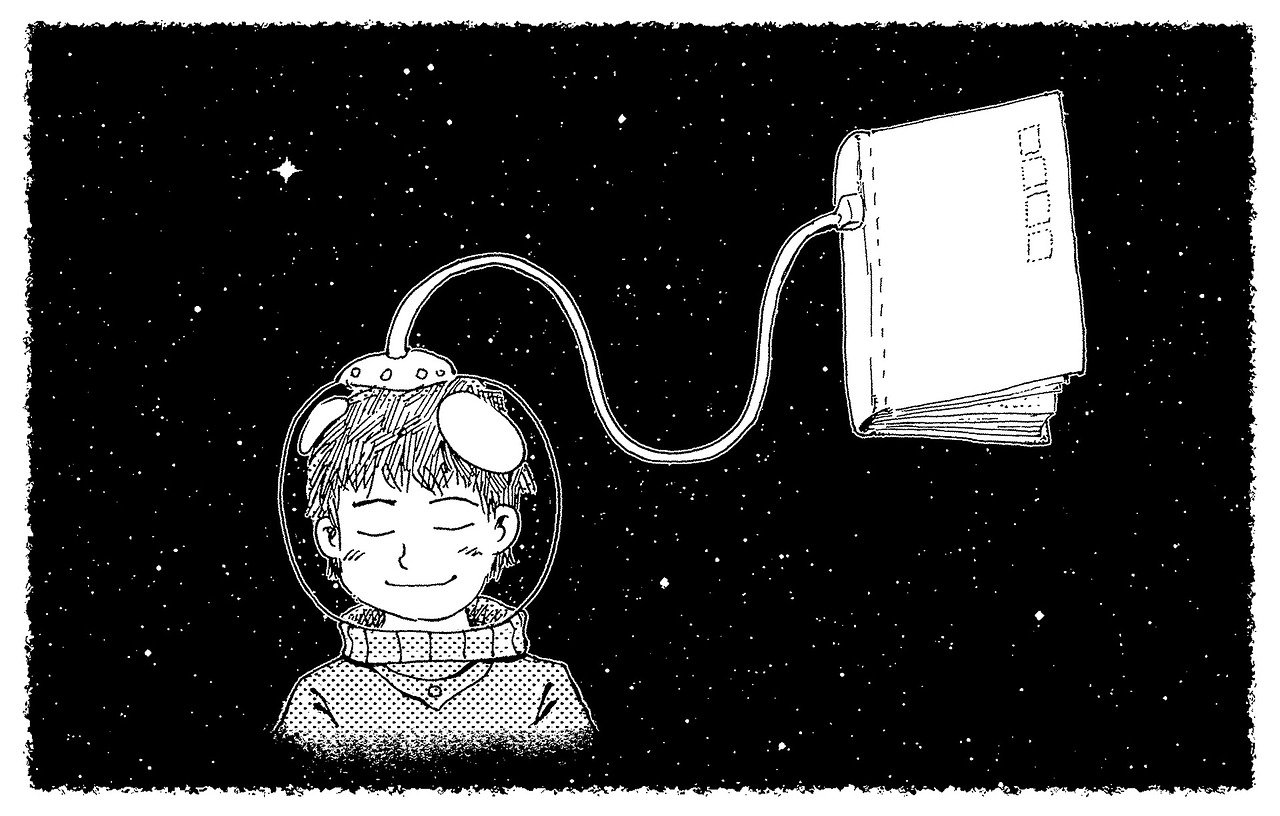
A year into the teaching of young teenagers from diverse background ranging from underprivileged family environments to unmotivated learners, I came to a realisation that one of the root causes of their incapability to learn quickly and more, was because they were not supported with discovering on their own… WHY they are learning certain modules, or that they did not receive guidance in how to learn BETTER.
With this understanding, I have experimented with a few pedagogical activities, in order to plant the seeds of interest, give them a reason for learning, and to show them a few ways to plan their own mental strengthening and future knowledge & skills acquisition activities.
As this is a multi-prong problem, I have developed several toolkits intended for different purposes targeting the:
- “Opening of their minds”
- Helping them to see and dream better, in order to find their motivation.
- “Flows of learning and studying”
- Helping them to see a path to improve and strengthen themselves, so that they can adapt or create their own flows in future.
- “Flows of discipline and self-regulation”
- Helping them to understand the importance of one’s mental state on their thinking and learning capabilities, and
- How to practice mindfulness techniques to self-regulate their emotions in stressful home/school/personal environments.
- “Communities, rewards and benefits of what they are studying”
- Showing them how to have fun, build better networks and bonds with those in their areas of studies.
One of the activities that I slotted into my teaching flow at the start of each new class is an Interest Profiling exercise, designed to show the actual iterative flow of knowledge and skills mastery. This is intended to help the kids see, plan and learn better.
Toolkit for Learning How to Learn: Case Studies (2a)
Steps of the Interest Profiling exercise is as follows:
- Decompose the steps of human learning and mastery:
- In any new topic – We will first follow instructions – to:
- Fill our unknowns through external guidance,
- Create small successes that can motivate ourselves in attempting tougher knowledge and skills acquisition activities.
- We will then have more awareness of the resources available in the topic we are studying, as well as the various methods which guides the intended problem solving activities.
- With the build-up of successes and lessons learnt from failures, we will gain confidence to apply what was learn in different ways, adapting methods taught to solve different problems.
- The moment we gain confidence to create our own ways to solve new problems, that’s when we start owning the domain we have learn and now try to find work in. This can be summed-up as conduct of:
- Adaptation and customisation of prior knowledge (Do Better).
- Plus, the ability to find and acquire new complementary knowledge (Do More).
- The final stage to reach the ceiling of our “current state” potential will then be daring to reverse others’ flows (reverse engineering/analysis), finding and inventing new ways to do, build, solve things in our domains (Do New).
- In any new topic – We will first follow instructions – to:
- Once we have mastery over our first domain knowledge stack, we can then restart the flow for acquisition of complementary domain disciplines.
- With awareness of more than one stack and spectrum of domain knowledge, we can then gain more unique perspectives, combining what we know in new ways to build ourselves as a:
- Multi-disciplinarian
- Draws on knowledge from different disciplines but stays within their boundaries.
- Inter-disciplinarian
- Analyzes, synthesizes and harmonizes links between disciplines into a coordinated and coherent whole.
- Trans-disciplinarian
- Integrates the natural, social and [technical domain] sciences in a humanities context, and transcends their traditional boundaries.
- Multi-disciplinarian
Toolkit for Learning How to Learn: Case Studies (2b)
The iterative flow for “Building” or Cultivation of our own capabilities can then be defined as:
- Understand our own CORE:
- WHY are we learning this?
- HOW can this knowledge or skill help us?
- WHO can we learn from?
- WHAT can we do with what we have learnt?
- WHEN can we reach our targeted learning milestones?
- Do BETTER:
- Improve, Optimise and Strengthen Our CORE Discipline.
- Becoming a Specialist.
- Do MORE:
- Search For, Seek Out, Acquire, Complementary Wings of Knowledge.
- Becoming a Multi-Disciplinarian.
- Do NEW:
- Reach Out, Step into the Unknowns, Become a Noob Again.
- Learn a Totally New Discipline, to Connect the Dots Back to Your CORE and Wings of Knowledge.
- Becoming an Inter-Disciplinarian.
- Overtime as we keep strengthening, growing and solving more complex problems in the world, we may be able to see the larger picture.
- Thus, becoming a Trans-Disciplinarian.
Reference Sources:
- LinkedIn. Guido Palazzo. University of Lausanne. Professor of Business Ethics. Ref: https://www.linkedin.com/posts/guidopalazzo-_when-max-weber-was-criticized-by-a-colleague-activity-6973666999298134017-8_Ny
- PubMed.Gov. National Library of Medicine (NIH). National Center for Biotechnology Information. Clinical Investment Medicine. Review. Multidisciplinarity, interdisciplinarity and transdisciplinarity in health research, services, education and policy: 1. Definitions, objectives, and evidence of effectiveness. Bernard C K Choi 1, Anita W P Pak. 2006 Dec;29(6):351-64. Ref: https://pubmed.ncbi.nlm.nih.gov/17330451/
Author: HO Wei Jing
Dated: Oct 2022